

In civil, heavy, and underground construction, numbers tell the story. Linear feet of trench. Cubic yards of excavation. Conduit runs. Duct banks. Vaults. Restoration quantities. When those numbers are right, projects tend to stay financially stable. When they are wrong, problems often follow.
The importance of accurate take-offs in construction cost analysis cannot be overstated. Every estimate, budget, change order, and cost report relies on quantities that were originally developed during the take-off process. If the foundation is flawed, the financial structure built on top of it is vulnerable. This is especially true in cable TV, telecommunications, fiber optic, and electrical infrastructure projects, where layered scopes and shifting site conditions add complexity to even straightforward work.
Whether you are a contractor preparing a bid, an owner reviewing a change order, or an attorney evaluating a claim, understanding how accurate take-offs affect construction cost analysis and accounting is essential. The connection between quantities and financial outcomes becomes even more critical when disputes arise.
What Are Accurate Take-Offs and Why Do They Matter in Construction Cost Analysis and Accounting?
A take-off is the detailed process of identifying and measuring the materials, labor units, and work quantities required to complete a project. At first glance, it may seem procedural. Measure the drawings. Count the components. Apply unit costs. But in reality, accurate take-offs demand interpretation, judgment, and a clear understanding of contract scope.
An accurate take-off reflects not only what appears on the plans but also what the contract requires. It accounts for trench widths, restoration layers, access limitations, phasing constraints, testing requirements, and coordination with existing utilities. In other words, it captures the real work, not just the drawn work.
Why does this matter? Because take-offs are directly tied to cost analysis and accounting. Estimated quantities feed into job cost systems. They inform procurement. They shape production assumptions. Later, those same quantities are often used to evaluate productivity, justify change orders, and reconcile billing. When the quantities are solid, financial reporting becomes clearer and more defensible.
Defining Quantity Take-Offs in Civil and Heavy Construction
In civil and underground construction, take-offs typically include:
- Linear footage for trenching, conduit, or pipe installation
- Area measurements for paving and surface restoration
- Volume calculations for excavation and backfill
- Assemblies such as duct banks, vaults, and handholes
Each of these quantities can vary significantly depending on depth, soil conditions, traffic control requirements, or environmental constraints. A trench through open ground is very different from a trench in a congested urban corridor. If those differences are not captured in the take-off, the cost impact can be substantial.
How Take-Offs Connect to Construction Cost Analysis and Accounting
Accurate take-offs provide the roadmap that connects scope to cost codes. When estimating data aligns with accounting systems, contractors and owners can track costs against planned quantities in a meaningful way. This alignment supports cleaner reconciliation, better forecasting, and more credible explanations when costs shift.
From a dispute perspective, that alignment becomes even more valuable. When an expert reviews a claim, one of the first questions is often simple: Do the billed quantities match the contract scope and actual installed work? If take-offs were well prepared and documented, that question is much easier to answer.
How Inaccurate Take-Offs Lead to Financial Risk, Claims, and Litigation
It is rare for a dispute to start with someone saying, “The take-off was wrong.” Instead, the issue often surfaces months later as a budget overrun, a rejected change order, or a contested pay application. By then, the inaccurate quantity has already influenced pricing, scheduling, and resource allocation.
Consider a fiber optic project where restoration quantities were underestimated. Asphalt saw-cutting, base replacement, and surface restoration were measured lightly during bidding. As construction progresses, the actual restoration area exceeds the estimate. The contractor absorbs some of the cost but eventually submits a change order. The owner questions whether the work was already included. Now what?
This is where quantity verification intersects with construction claims analysis. When accurate take-offs are missing or poorly documented, both sides may rely on competing spreadsheets rather than objective measurement standards.
Underbidding and Profit Erosion
Underbidding often traces back to incomplete quantity development. Missing assemblies, overlooked restoration layers, or underestimated depths can erode margins quickly. In competitive markets such as telecommunications or electrical infrastructure, small percentage errors in quantities can translate into significant financial exposure.
Over time, those gaps may lead to claims for additional compensation. Without clear take-off documentation, entitlement becomes harder to prove. The result can be strained relationships, delayed payments, and in some cases litigation.
Change Order Disputes and Scope Creep
Change orders frequently revolve around whether additional quantities were truly outside the original contract scope. Did the plans require that extra conduit? Was deeper excavation foreseeable? Were traffic control quantities properly included?
When take-offs are prepared using consistent measurement rules and clearly stated assumptions, these questions are easier to resolve. When they are not, disputes can escalate into formal proceedings where expert evaluation becomes necessary.
Expert Witness Evaluation of Quantity Errors
In dispute settings, experts often reconstruct take-offs independently. They review contract documents, plan revisions, and field records. They apply consistent measurement standards. Then they compare supported quantities to billed amounts and job cost records.
This forensic process ties directly into construction cost analysis and accounting. It moves the conversation from opinions to documented methodology. Courts and arbitrators tend to respond more favorably to structured analysis than to unsupported assertions.
For additional insight into how cost disputes are evaluated, see construction cost analysis in disputes and litigation.
The Role of Accurate Take-Offs in Telecommunications, Fiber Optic, and Electrical Infrastructure Projects
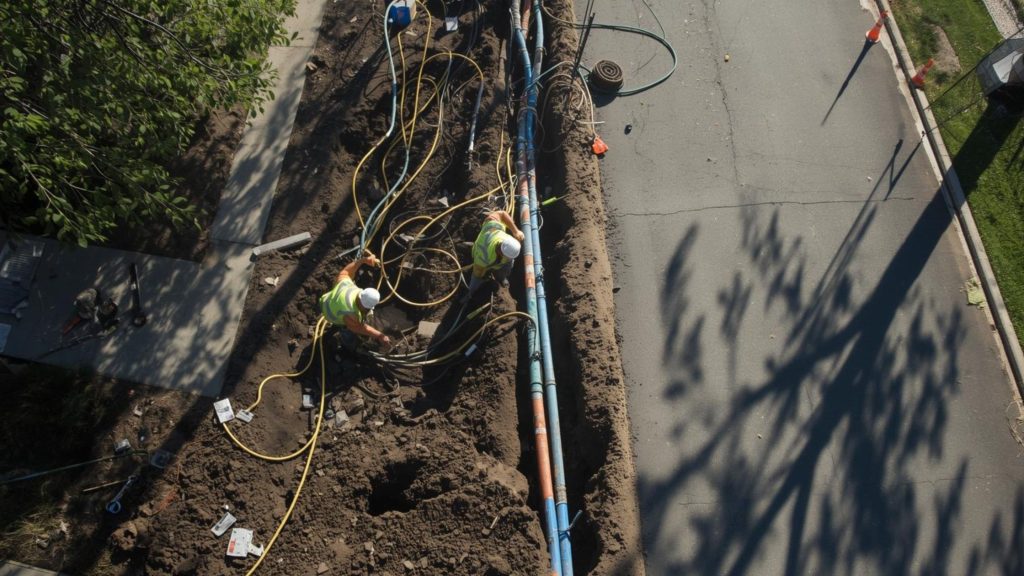
Telecommunications and utility projects present unique challenges. Designs evolve. Field conditions differ from record drawings. Access restrictions change sequencing. Quantities that seemed straightforward during bidding can shift quickly.
In fiber optic and electrical infrastructure work, the scope is layered. Conduit runs lead to pull operations. Pull operations lead to splicing and termination. Testing and commissioning follow. If one component is undercounted, related labor and equipment assumptions may also be misaligned.
Underground Utility and Trenching Quantities
Trenching quantities are rarely simple. Depth variations, unstable soils, groundwater, and utility conflicts all influence cost. Restoration can include base, asphalt, concrete, landscaping, and striping. A thorough take-off anticipates these elements and documents assumptions clearly.
When these factors are not captured, later reconciliation becomes more difficult. What was planned? What was installed? What was reasonably foreseeable? These are common questions in utility-related disputes.
Labor and Equipment Allocation in Utility Installation
Directional drilling versus open-cut trenching, vault placement, cable pulling, and splicing all carry distinct labor and equipment profiles. Accurate take-offs help ensure those differences are reflected in pricing and scheduling.
From an accounting standpoint, this alignment supports stronger project cost reconciliation. When labor hours and equipment costs track logically to measured quantities, financial reporting becomes more transparent and defensible.
For specialized support in this area, explore civil, heavy, and underground construction cost analysis and accounting services.
Integrating Quantity Take-Offs with Construction Cost Analysis and Accounting Systems
Take-offs should not sit in isolation. They should integrate directly with cost codes, procurement logs, and billing systems. When estimating and accounting teams communicate effectively, quantity updates flow through the financial system in a structured way.
Best practice involves treating take-offs as living documents. When plan revisions occur, quantities are updated. When RFIs clarify scope, assumptions are documented. This disciplined approach reduces confusion and strengthens the reliability of construction cost analysis and accounting later in the project lifecycle.
Aligning Take-Off Data with Job Cost Reports
Aligning estimated quantities with cost reports allows stakeholders to evaluate productivity and forecast remaining costs with greater accuracy. If installed quantities exceed planned amounts, the variance can be identified early and addressed proactively.
Best Practices for Quantity Verification and Reconciliation
- Maintain clear documentation of measurement methods
- Track revisions and plan updates systematically
- Conduct independent quantity checks on major scopes
- Reconcile installed quantities against delivery tickets and field reports
These steps may seem basic, but they often determine whether a claim is persuasive or vulnerable.
A Forensic Approach: How Experts Analyze and Reconstruct Take-Offs in Disputes

When disputes escalate, an independent forensic approach brings clarity. The objective is not to advocate blindly for one side. It is to determine what the contract required, what was installed, and how quantities align with costs.
The process typically includes contract interpretation, detailed plan review, independent recalculation of quantities, and reconciliation with accounting records. Findings are documented in a transparent, repeatable manner.
Step-by-Step Take-Off Review Process
1. Scope mapping: Identify contractual inclusions and exclusions.
2. Plan analysis: Review drawings, revisions, and addenda.
3. Independent recalculation: Measure quantities using consistent standards.
4. Financial reconciliation: Compare supported quantities to billed and recorded costs.
When presented clearly, this analysis supports credible expert witness cost evaluation in mediation, arbitration, or trial.
Additional expertise related to equipment-driven cost evaluation can be found at heavy equipment cost analysis and accounting.
Conclusion: Why Accurate Take-Offs Are Foundational to Construction Cost Analysis Success
The importance of accurate take-offs in construction cost analysis becomes most evident when problems arise. Quantities influence pricing, scheduling, billing, and ultimately dispute resolution. When they are prepared carefully and documented thoroughly, they protect both contractors and owners.
In complex civil, telecommunications, fiber optic, and electrical infrastructure projects, the margin for error is small. Accurate take-offs support better bids, clearer accounting, and more defensible claims. They are not just estimating tools. They are risk management tools.
If your project involves disputed quantities, cost overruns, or claim evaluation, a structured and independent review can provide clarity. Discovery Experts delivers detailed, litigation-focused analysis grounded in contract interpretation and disciplined methodology.
Ready to discuss your project or dispute? Contact Discovery Experts to schedule a consultation and evaluate your next steps.
