
Labor productivity disputes and construction claims are not just technical disagreements buried in spreadsheets. They often represent real-world breakdowns on active job sites where time, money, and coordination collide. When a project begins to fall behind schedule or exceed budget, one of the first questions asked is simple: why did productivity drop? The answer, however, is rarely simple.
In civil, heavy, and underground construction, productivity is tied to a complex mix of labor, equipment, sequencing, and site conditions. A delay in trenching, a misstep in utility installation, or a poorly timed equipment delivery can ripple across the entire project. When those issues escalate, they often turn into formal claims. That is where detailed, defensible analysis becomes essential. Many project stakeholders rely on civil, heavy, underground construction labor analysis to uncover what actually happened and who is responsible.
Whether you are a contractor, attorney, or project owner, understanding how these disputes form and how they are evaluated can make a significant difference in outcomes. Let’s take a closer look at what drives these claims and how they are resolved.
What Are Labor Productivity Disputes in Construction Projects?
At their core, labor productivity disputes and construction claims focus on a gap between expectation and reality. A contractor bids a project based on assumed production rates. Crews are expected to install a certain amount of pipe, complete a defined length of trench, or finish a phase of work within a set number of labor hours. But what happens when those expectations are not met?
This is where disputes begin. Contractors may argue that external factors such as design changes, site congestion, or unforeseen conditions caused labor inefficiency. On the other side, owners or opposing parties may claim that the contractor simply mismanaged the work or underestimated the effort required.
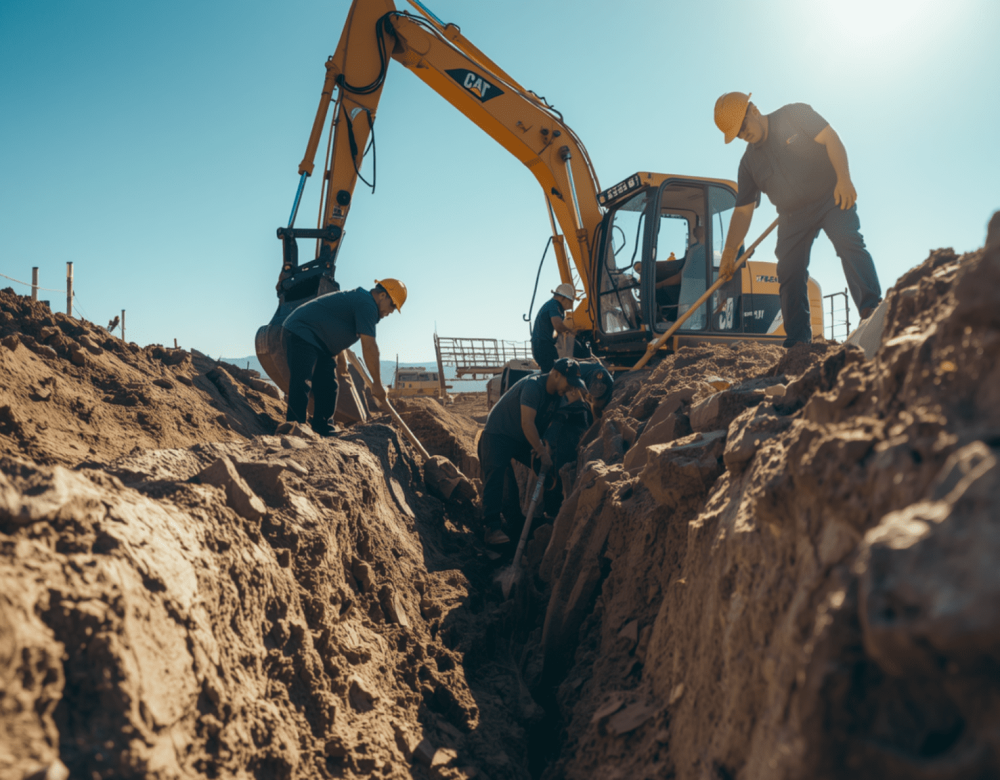
Consider a typical underground utility project. Crews may be installing water, sewer, or telecommunications lines using excavators, trenchers, and loaders. If progress slows due to repeated utility conflicts or restricted access, productivity drops. But if documentation is unclear, the cause becomes disputed. Was it truly an external disruption, or an internal planning issue?
These disagreements often expand beyond productivity alone. They become part of broader construction claims involving delays, cost overruns, and contract disputes. Without a structured analysis, it becomes difficult to separate fact from assumption.
Common Causes of Labor Productivity Loss and Inefficiency
Site Conditions and Field Disruptions
Many productivity issues start in the field, where conditions are rarely as predictable as they appear on paper. Unexpected soil conditions, groundwater intrusion, or unmarked utilities can slow work significantly. Even something as routine as limited access can force crews to adjust their workflow, reducing efficiency.
Think about a trenching operation. If crews encounter unstable soil or water infiltration, they may need additional shoring, pumping, or safety measures. Each adjustment takes time. Multiply that across days or weeks, and the impact becomes substantial.
Weather also plays a role. Heavy rain, extreme heat, or muddy conditions can affect both labor performance and equipment efficiency. For projects involving trenchless methods or specialized equipment, even small disruptions can have a measurable effect on output.

Management, Design, and Resource Problems
Not all productivity loss comes from external conditions. In many cases, inefficiency is tied to planning and coordination. Poor scheduling, overlapping trades, or unclear work instructions can lead to crews waiting instead of working. And waiting time is one of the biggest hidden costs on any job site.
Design changes are another major factor. When drawings are incomplete or revised mid-project, crews may need to redo work or adjust installations. This creates a cycle of disruption that is difficult to track unless properly documented.
Resource allocation is equally important. If key equipment such as cranes, dump trucks, or compactors is unavailable when needed, labor productivity drops. Even smaller tools or support equipment can have an outsized impact when they are not aligned with the pace of the work.
- Common inefficiency drivers include:
- Trade stacking and overcrowded work areas
- Delayed material deliveries
- Equipment downtime or misallocation
- Frequent rework due to design changes
Individually, these issues may seem minor. Collectively, they can significantly affect project performance.
Methods for Analyzing Construction Labor Productivity Claims
When a productivity dispute arises, the conversation quickly shifts from opinion to evidence. What do the records show? How did performance change over time? And most importantly, what caused that change?
A strong analysis begins with documentation. Daily reports, labor hours, production quantities, equipment logs, and schedules all provide pieces of the puzzle. Without these records, even a valid claim can be difficult to prove.
One widely used approach is the measured mile analysis. This method compares periods of normal productivity with periods of reduced productivity on the same project. Because it relies on actual project data, it is often considered one of the more reliable techniques.
Other methods may include cost-based analysis, productivity benchmarking, or segmented evaluations of specific work activities. For example, an expert might compare trench excavation rates before and after a disruption or analyze how equipment utilization changed during a critical phase of the project.
Equipment interaction is another key factor. Labor productivity is closely tied to how equipment is used. If excavators, trenchers, or cranes are underutilized due to external constraints, that may support a claim. But if they sit idle due to internal inefficiencies, the conclusion may be very different.
To fully understand the financial impact, productivity analysis is often paired with construction cost analysis for disputes and litigation. This helps quantify damages in a way that aligns with industry standards and legal expectations.

The Role of Expert Witness Services in Productivity Disputes
At some point, many productivity disputes require outside expertise. Why? Because these cases are rarely straightforward. They involve technical data, conflicting narratives, and high financial stakes.
An expert witness brings an independent perspective grounded in industry experience. They review project records, analyze productivity trends, and evaluate whether the claimed impacts are reasonable. More importantly, they connect the technical details to a clear, defensible conclusion.
For attorneys, this support is critical. It transforms raw data into a structured argument that can be presented in mediation, arbitration, or court. For contractors and owners, it provides clarity on whether a claim is justified or overstated.
In many cases, disputes can be resolved before reaching trial. This is where alternative dispute resolution expertise in construction becomes valuable. A well-supported expert analysis can often narrow disagreements and lead to faster, more efficient outcomes.
When cases do proceed to litigation, expert testimony can make a significant difference. A credible expert explains not just what happened, but why it matters and how it aligns with industry practices.
Challenges in Proving Labor Productivity Loss in Construction Claims
Proving labor productivity loss is not always straightforward. One of the biggest challenges is isolating cause. Projects are dynamic environments where multiple issues can occur at the same time. Separating those factors requires careful analysis.
For example, if a project experiences both weather delays and design changes, how much of the productivity loss is tied to each? Without clear documentation, it becomes difficult to answer that question with confidence.
Another common issue is incomplete or inconsistent records. If daily reports lack detail or production tracking is inconsistent, the claim becomes harder to support. This does not necessarily invalidate the claim, but it does weaken its foundation.
There is also the challenge of methodology. Using the wrong analytical approach can undermine an otherwise valid claim. That is why it is important to apply methods that are widely accepted and supported by project-specific data.
Ultimately, the strongest claims are those that combine clear documentation, logical analysis, and a well-supported explanation of causation.
Best Practices for Preventing and Resolving Productivity Disputes
While disputes cannot always be avoided, they can often be managed more effectively with the right approach. It starts with documentation. Keeping accurate daily logs, tracking production rates, and recording disruptions as they occur can make a significant difference later.
Proactive management also plays a role. Identifying potential issues early and addressing them before they escalate can help maintain productivity and reduce the likelihood of claims.
It is also worth asking: when should expert analysis be brought in? In many cases, earlier is better. Early evaluation can clarify the strengths and weaknesses of a claim, helping stakeholders make informed decisions about how to proceed.
Key best practices include:
- Maintain detailed and consistent project records
- Track labor and production data in real time
- Document disruptions and changes as they happen
- Seek expert review before disputes escalate
Labor productivity disputes and construction claims are often complex, but they do not have to be overwhelming. With the right analysis and support, they can be resolved in a way that is fair, accurate, and defensible.
If you are dealing with a productivity-related dispute or need a professional evaluation of a construction claim, contact Discovery Experts to discuss your case and explore how expert analysis can support your position.
