
Slip, trip, and fall incidents on construction sites are often described as “common” accidents. But in the construction industry, there is nothing routine about them. These events frequently occur in fast-moving, constantly changing environments where surface conditions shift daily, crews rotate in and out, and heavy equipment operates alongside foot traffic. What may look like a simple loss of footing can quickly evolve into a serious injury claim, a dispute over responsibility, and ultimately, complex litigation.
For attorneys, insurers, and construction professionals, the real issue is rarely just whether someone fell. The deeper questions matter more. Who controlled the area? Were safety standards followed? Was the condition foreseeable? Could it have been corrected? In civil, heavy, underground, utility, and telecommunications projects, answering these questions requires more than general safety knowledge. It demands technical analysis grounded in real-world construction practices and supported by credible Construction Testimony.
Understanding Slip, Trip, and Fall Incidents on Construction Sites
Slip, trip, and fall incidents on construction sites occur when a worker or visitor loses balance due to unstable surfaces, obstructions, elevation changes, or poor environmental conditions. Unlike incidents in completed buildings, construction site conditions are temporary and evolving. Access routes may consist of compacted soil one week and aggregate base the next. Drainage can change after a single rain event. Materials may be staged in new locations as sequencing progresses.
Because construction projects are transitional by nature, walking-working surface hazards are often influenced by schedule pressures, trade stacking, and shifting logistics plans. On heavy civil sites, haul routes and laydown yards may intersect with pedestrian pathways. On underground utility projects, trenches and vaults can alter normal circulation patterns. Even lighting conditions can change depending on work hours or site power availability.
This variability makes post-incident analysis particularly important. What were the actual conditions at the time of the event? Were inspections documented? Did the site safety plan address the specific hazard involved? These are not abstract questions. They are central to determining standard of care and legal responsibility. For matters involving complex infrastructure work, Discovery Experts provides specialized analysis through civil, heavy, and underground construction testimony services tailored to high-risk environments.
Common Causes and High-Risk Conditions in Civil, Utility, and Telecom Work
While every case is unique, certain patterns appear repeatedly in slip, trip, and fall incidents on construction sites. Surface instability is one of the most common contributors. Loose gravel, mud accumulation, poorly compacted backfill, and temporary ramps without proper transitions can create unpredictable footing. In some cases, drainage deficiencies allow water to pool and freeze, increasing slip risk. In others, debris from active operations is not promptly cleared, creating trip hazards.
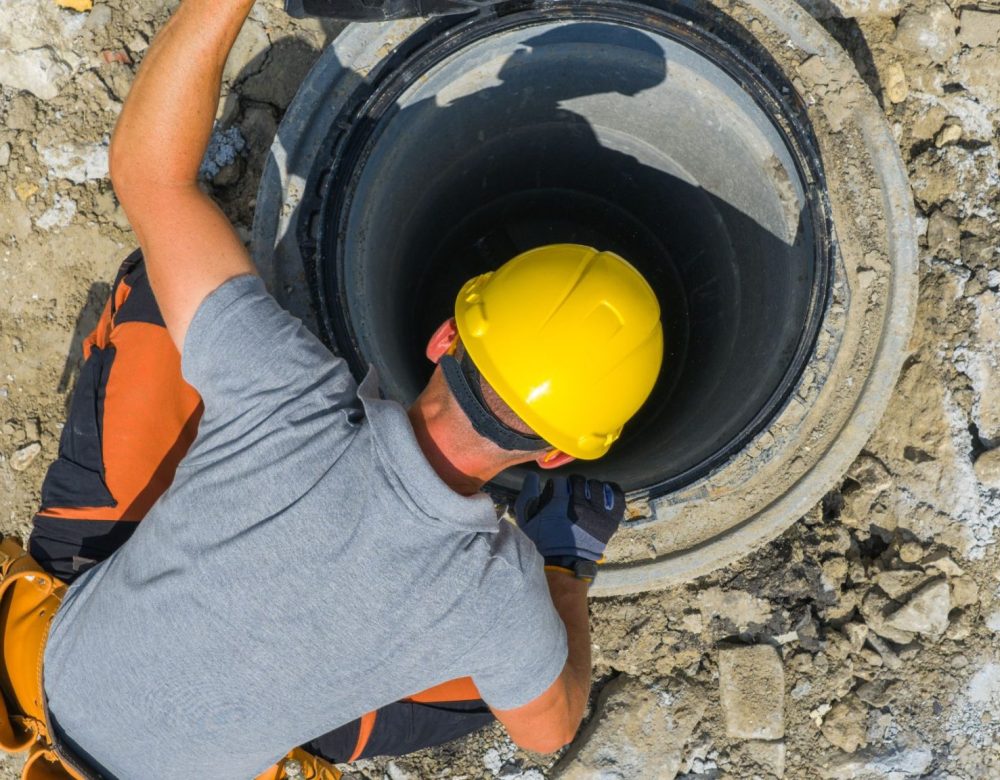
Utility and telecommunications projects introduce additional risk variables. Fiber optic, cable TV, and electrical installations frequently involve open excavations, temporary surface restorations, and transitional access points around handholes or vaults. When multiple crews are working simultaneously, hoses, conduit, and materials may extend across pathways. In confined or partially enclosed areas, visibility may be reduced, and uneven trench edges can complicate footing.
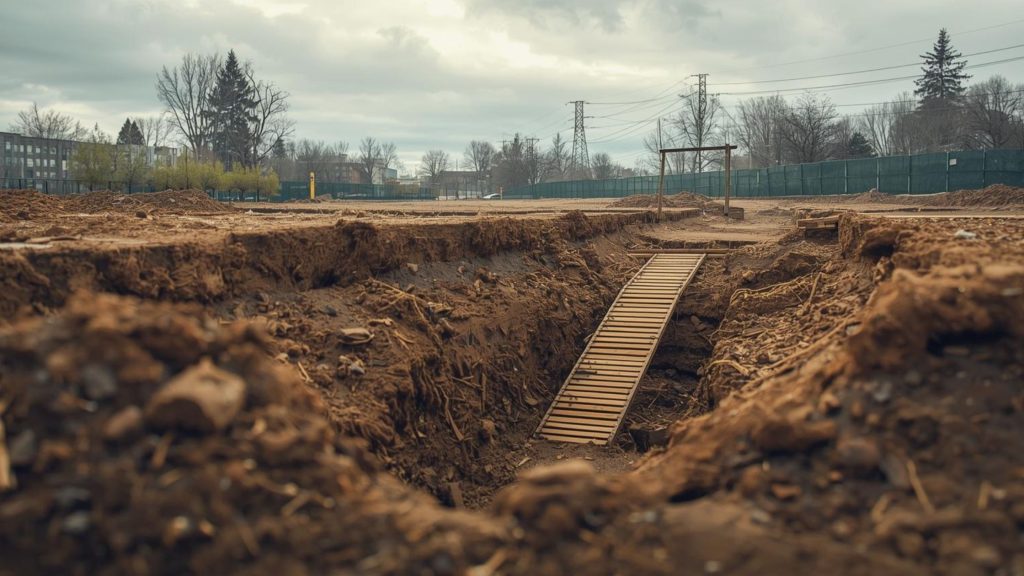
Heavy equipment operations also play a significant role. Consider a scenario where tracked equipment repeatedly crosses a pedestrian route. Mud accumulates, ruts form, and visibility around stockpiles decreases. Even if warning signs are posted, the practicality of the route matters. Was there a safer alternative? Was pedestrian access segregated from equipment movement? These are the kinds of practical field questions that often determine whether a hazard was reasonably controlled.
High-risk conditions frequently include:
- Temporary access paths without defined stabilization
- Obstructed egress routes near active work zones
- Inadequate lighting during early morning or evening shifts
- Poor coordination between subcontractors regarding housekeeping
Understanding these realities requires experience in the types of projects at issue, not just familiarity with general safety theory.
OSHA Compliance, Safety Standards, and How Violations Shape Disputes
OSHA regulations and industry standards often frame the discussion in slip and fall litigation. However, compliance is rarely a simple yes-or-no determination. The real issue is whether safety requirements were meaningfully implemented. Did supervisors conduct regular inspections? Were hazards documented and corrected? Were crews trained to recognize and address walking-working surface risks?
OSHA provisions related to housekeeping, access, and fall protection are frequently cited in these disputes. Yet the presence of a citation does not automatically establish causation, and the absence of one does not guarantee compliance. A thorough analysis evaluates whether the project’s safety plan addressed foreseeable conditions and whether site practices aligned with those written policies.
Documentation becomes critical at this stage. Daily reports, toolbox talks, corrective action logs, and safety audits can either strengthen or undermine a defense. In some cases, records reveal that hazards were identified but not promptly corrected. In others, they demonstrate a proactive safety culture with reasonable controls in place. When safety interpretation and regulatory analysis are central to a claim, experienced review can clarify the difference between unavoidable jobsite conditions and preventable violations. For further context, see Safety OSHA expertise for construction cases.
Determining Liability in Construction Site Slip and Fall Cases
Liability in slip, trip, and fall incidents on construction sites is rarely confined to a single party. Construction projects involve layered responsibilities. A general contractor may control overall site safety and logistics, while subcontractors manage specific work areas. Owners or construction managers may retain oversight authority depending on contract language.
When evaluating liability, several questions often guide the analysis:
- Who had control over the area where the incident occurred?
- Was the hazard created by one trade and left unaddressed?
- Did contractual provisions assign housekeeping responsibilities?
- Was the injured party required to follow specific access routes?
Distinguishing between worker inattention and unsafe site conditions can be particularly challenging. For example, if a worker deviated from a designated path, was that path practical and clearly marked? If equipment congestion forced pedestrians into a narrow corridor, was that foreseeable? These factual nuances often shape expert opinions and courtroom outcomes.
Traffic control and pedestrian routing can also become central issues, especially on large infrastructure sites. If access paths intersected with active equipment zones, separation practices must be examined. Discovery Experts provides analysis in this area through work zone safety expertise for civil and underground construction, which can be critical when site logistics are disputed.
The Role of Construction Testimony in Slip, Trip, and Fall Litigation
When a dispute progresses to mediation, arbitration, or trial, clear and credible Construction Testimony can significantly influence case direction. Expert witnesses help translate complex site conditions into understandable conclusions. They explain sequencing constraints, realistic safety measures, and how industry standards apply to the specific project environment.
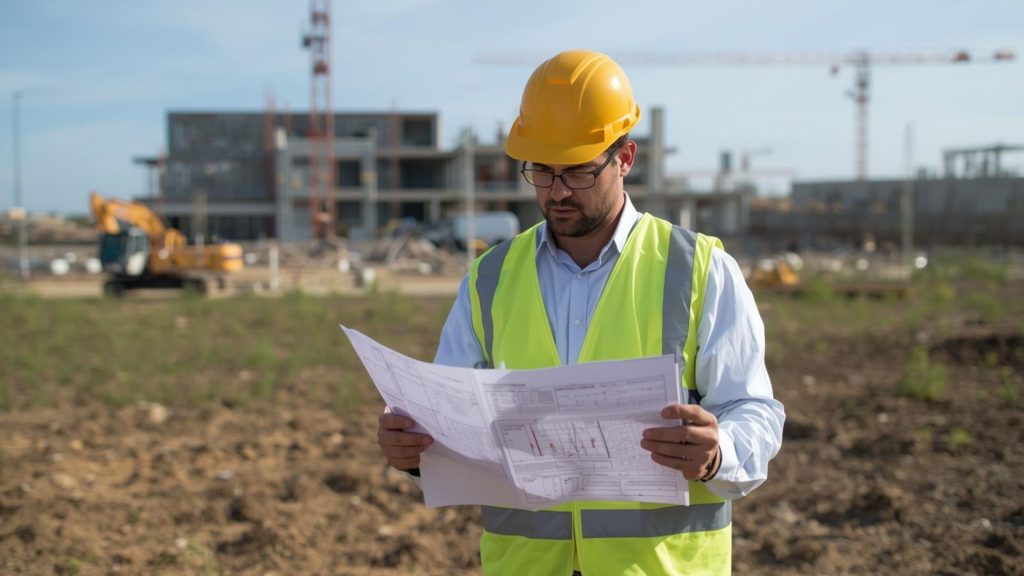
Strong Testimony is built on methodical analysis. This typically includes review of plans and specifications, safety manuals, inspection logs, subcontract agreements, and photographic evidence. Experts evaluate whether the alleged hazard was foreseeable, whether mitigation measures were feasible, and whether responsibilities were properly assigned and executed.
Importantly, effective testimony does not rely on generic safety platitudes. It addresses the actual project conditions. A telecommunications trenching project differs from a high-rise interior renovation. A heavy highway expansion differs from a small utility repair. Credible opinions reflect those differences and provide context that decision-makers can trust.
How Slip and Fall Incidents Are Investigated by Construction Experts
A thorough investigation begins with reconstructing the project environment at the time of the incident. Where exactly did it occur? What was the work activity that day? Were there weather events influencing surface stability? Site visits, when possible, help confirm geometry, slope, drainage, and access patterns.
The next phase focuses on documentation. Experts examine safety plans, daily reports, inspection logs, meeting minutes, and contractual provisions. They compare documented procedures with likely field conditions. Was there a reasonable inspection frequency? Were corrective measures timely? Did subcontract scopes clearly define housekeeping duties?
From there, the expert develops a structured opinion. This includes identifying primary and contributing factors, evaluating compliance with applicable standards, and articulating conclusions in clear language. The goal is not simply to assign blame, but to provide a technically sound explanation grounded in construction practice. Reports are written with the understanding that they may be scrutinized in deposition or trial, so clarity and defensibility are essential.
Conclusion: Why Expert Analysis Matters in High-Risk Construction Environments
Slip, trip, and fall incidents on construction sites may appear straightforward at first glance, yet the surrounding circumstances often reveal significant complexity. Civil, heavy, underground, and utility projects involve evolving conditions, multiple responsible parties, and operational constraints that must be carefully analyzed.
Early involvement of experienced construction professionals can clarify liability boundaries, identify documentation gaps, and strengthen case strategy. Whether evaluating potential exposure or preparing for expert disclosure, objective Construction Testimony provides clarity where conflicting narratives often exist.
If you are assessing a claim or preparing for litigation involving slip, trip, and fall incidents on construction sites, Discovery Experts offers specialized analysis tailored to complex infrastructure environments. Contact Discovery Experts to request a consultation and discuss how expert evaluation can support your case.
